 Research Institute
Berkeley Lab superconducting quantum computing testbed open to research collaborators.
Quantum computers and quantum networks, and the companies, research labs, funders, and communities building them: qubit hardware across modalities, the enabling stack of cryogenics, control electronics, and photonics, software, algorithms, and error correction, and the applications and access that turn machines into useful computation.
The field
Definition
Quantum computing: $1.88B market in 2026, 14 specialist funders, $275K-$1.65M check range
Field at a glance
Quantum computing represents one of the most capital-intensive and geopolitically significant computing revolutions since silicon. Unlike AI, which can be deployed incrementally, quantum requires fundamental physics breakthroughs, specialized hardware, and multi-year customer integration cycles. The sector has attracted $3.77 billion in funding through Q3 2025, with clear momentum shifting from speculative research toward architectures with credible paths to quantum advantage.
For founders, this is a niche within a niche. Only 14 active funders in the Superscout database focus on quantum, concentrated in North America (5), Europe (5), and Asia (5). Check sizes cluster around $275K for pre-seed rounds and $1.65M for growth-stage, reflecting the deep technical vetting required. The market favors companies solving specific, high-value problems in finance, pharma, materials science, and national security rather than general-purpose quantum computers.
Quantum computing leverages three primary physical implementations, each with distinct tradeoffs. Superconducting qubits, pioneered by Google and IBM, use macroscopic circuits operating at near-absolute-zero temperatures. They benefit from established semiconductor fabrication techniques for scaling and achieve nanosecond gate times, but suffer from short coherence windows (microseconds) requiring rapid error correction. Trapped-ion systems, developed by IonQ and Honeywell, confine individual ions using precise lasers. They achieve unprecedented coherence times (up to 600 seconds in hyperfine qubits) and gate fidelities exceeding 99.9%, but gate operations are slow (milliseconds) and scaling to thousands of qubits remains challenging.
Photonic quantum computers, pursued by Quandela and PsiQuantum, encode information in photons and operate at room temperature, eliminating costly cryogenic infrastructure. However, photon loss and the difficulty of reliably entangling photons create engineering obstacles. Neutral atom approaches from Pasqal and Atom Computing use optical traps to hold arrays of atoms, offering potential scaling advantages and room-temperature operation. Each architecture targets different problem classes: superconductors suit optimization on near-term hardware, trapped ions excel at chemistry simulation, photonics promise scalability without cooling, and neutral atoms offer a middle ground on coherence and speed.
Beyond hardware, the quantum stack requires specialized control systems. Companies like Quantum Machines provide the electronics and software that translate high-level quantum instructions into precise laser and microwave pulses that manipulate qubits. Classical-quantum hybrid systems, which dispatch appropriate problems to quantum processors while keeping the control loop and data processing classical, are emerging as the most pragmatic near-term architecture. Software tools for algorithm development, simulation, and optimization continue to mature through platforms from IBM, Amazon (Braket), Microsoft (Azure Quantum), and Google (Cirq).
Real-world quantum applications cluster into four high-value domains. Drug discovery and molecular simulation represent the most mature use case. Quantum computers can simulate molecular interactions with fidelity impossible for classical computers, compressing drug candidate identification from 4-6 years to 18 months. Roche's 2025 achievement—identifying three Alzheimer's drug candidates using quantum simulation in 18 months—validated this narrative and catalyzed pharma sector interest. Major pharmaceutical companies including Merck, AstraZeneca, and Sanofi have announced quantum research programs.
Financial services is the second major driver. Portfolio optimization, risk modeling, option pricing, and fraud detection all benefit from quantum speedup. Goldman Sachs and JPMorgan have deployed quantum algorithms for portfolio optimization. These use cases are attractive because they have clear economic value (basis points of performance matter at scale) and well-defined problem structures that map cleanly to quantum algorithms.
Materials science and battery design represent the third pillar. Companies developing next-generation batteries, semiconductors, and advanced materials use quantum simulation to explore molecular configurations and predict material properties. This accelerates the innovation cycle for hardware-dependent industries where materials performance is a competitive moat.
The fourth and most urgent domain is quantum-safe cryptography and security. As quantum computers approach sufficient scale, they threaten to break RSA and elliptic curve encryption retroactively through 'harvest now, decrypt later' attacks on encrypted data already captured. This creates immediate revenue opportunity for companies helping enterprises transition to post-quantum cryptographic standards ahead of regulatory deadlines (NSA's 2027 deadline for national security systems).
All of these use cases remain in pilot or research phase. Commercial quantum advantage—where a quantum solution demonstrably outperforms classical approaches on a production problem—remains rare. This explains why quantum computing revenues have grown only to $650-750 million globally despite massive funding, well below the $1+ trillion AI market.
Quantum computing attracts a highly specialized subset of venture capital. Across the Superscout platform, 14 funders have invested in quantum-focused startups, with clear stage distribution: 5 focus on pre-seed, 9 on seed, 7 on Series A, 6 on Series B, and 1 on growth equity. This distribution reflects the sector's early maturity—capital is beginning to consolidate behind later-stage winners, but the pipeline remains robust at early stages.
Median check sizes are $275,000 for minimum checks and $1,650,000 for maximum commitments, roughly 2-3x larger than consumer software at equivalent stages, reflecting the capital intensity of hardware and simulation infrastructure. Top funders include IQT (In-Q-Tel), which bridges US national security with venture backing across seed to Series B; Summer Capital, which specializes in quantum and data; Qubits Ventures, which focuses on quantum and AI-native platforms; and several government-aligned vehicles like MiraclePlus and Harper Court Ventures.
Geographic distribution is remarkably balanced: North America (5 funders), Europe (5), and Asia (5) all have substantial quantum ecosystems. This mirrors government support: Japan announced $7.4B in quantum investment by April 2025, Spain committed $900M, China established a 1 trillion yuan national quantum fund, and the US continues to fund quantum research through DARPA and NSF initiatives. Global funders (3) and UK/Canada/Japan-specific investors (1 each) round out the landscape.
Who is working on it, and who is paying for it
The labs, companies and funders doing the work, and the groups helping it along.
Research InstituteBerkeley Lab superconducting quantum computing testbed open to research collaborators.
AIST center for quantum and AI technology development and testbeds in Japan.
 University
DOE National Quantum Information Science Research Center led by Brookhaven that co-designs quantum hardware, software, and algorithms.
 Research Institute
Duke University center building trapped-ion quantum computers and related systems.
 Research Institute
NSF Quantum Leap Challenge Institute working on distributed quantum processors, network testbeds, and protocols.
 Research Institute
India National Quantum Mission thematic hub for quantum computing, hosted at the Indian Institute of Science.
University of Waterloo research institute for quantum computing theory and hardware.
Forschungszentrum Julich facility that hosts and integrates quantum computers of several modalities with supercomputing.
Korea Research Institute of Standards and Science center developing superconducting quantum computing systems.
 University
 Research Institute
Bavarian initiative with the goal of developing and operating competitive quantum computers.
 Research Institute
UK national lab at Harwell dedicated to quantum computing, with testbeds and user access programs.
 Government Agency
Advancing quantum technology for India's future.
 Research Institute
University of Copenhagen program developing quantum computing hardware and applications.
 Research Institute
DOE National Quantum Information Science Research Center led by Argonne, focused on quantum interconnects, networks, and materials.
 Research Institute
 Research Institute
NSF Quantum Leap Challenge Institute led by the University of Maryland developing robust quantum simulators.
 Research Institute
European consortium building a prototype quantum internet, coordinated from Delft.
 University
 Research Institute
 Research Institute
RIKEN center pursuing quantum computers from hardware to software, including superconducting systems.
 Research Institute
DOE National Quantum Information Science Research Center led by Fermilab, focused on superconducting qubit coherence and quantum systems.
 Research Institute
UK quantum technology hub researching integrated quantum networks.
Swedish national program coordinated from Chalmers whose main project is building a superconducting quantum computer.
 University
 University
 Research Institute
NSF Engineering Research Center led by the University of Arizona developing technologies for a quantum internet.
 University
 University
 Research Institute
Caltech research institute for quantum information science that publishes the Quantum Frontiers blog and a YouTube channel.
 University
 University
 University
 University
 University
 Research Institute
United Kingdom national program for quantum technology translation.
 Venture Capital
The UK's only quantum computing-dedicated venture capital firm.
 Venture Capital
Investing in quantum-inspired technology.
 Venture Capital
The world's largest quantum technology venture capital fund.
 Venture Capital
Investing in the future of quantum technology.
 Venture Capital
Investing in the future of quantum technology.
 Venture Capital
Investing in the future of quantum technology.
 Venture Capital
Investing in the future of quantum technologies.
 Venture Studio
Building startups from quantum research.
 Venture Capital
Investing in the future of quantum technologies.
 Venture Capital
Investing in the future of quantum technology.
 Venture Capital
Investing in the future of quantum technologies.
 Venture Studio
Empowering quantum startups for a transformative future.
 Government Vc
Advancing quantum information science and technology.
 Venture Capital
Accelerating the quantum computing revolution.
 Venture Capital
Investing in the future of Applied Quantum Intelligence.
 Venture Studio
Transforming deep tech breakthroughs into sustainable ventures.
 Venture Capital
Investing in the future of quantum technologies.
 Venture Capital
Investing in frontier technologies from MIT.
 Venture Capital
Investing in the future of quantum technologies and AI.
 Startup
Builds automated design tools for utility-scale, fault-tolerant quantum computation.
 Startup
Builds photonic quantum computers combining deterministic photon sources with silicon photonics.
 Startup
Develops hybrid quantum-classical algorithms and products for healthcare and life sciences problems.
 Startup
Building the first universal, fault-tolerant quantum computer.
 Startup
Software for designing, orchestrating, and managing entanglement-based quantum networks.
 Startup
Builds trapped-ion quantum computers, including rack-mounted systems deployed in HPC centers.
 Startup
Develops and deploys on-premise superconducting quantum computers for HPC centers.
 Startup
VTT spinout building traveling-wave parametric amplifiers for high-fidelity qubit readout.
 Startup
Builds multiplexed quantum repeaters from rare-earth-doped crystal memories and photon-pair sources.
 Startup
Develops semiconductor spin-qubit quantum computers that shuttle electrons across chips.
 Startup
Builds neutral-atom quantum computers aimed at fault-tolerant operation.
 Startup
Builds dilution refrigerators, cryocoolers, and cryogenic measurement infrastructure used to cool quantum computers.
 Startup
Quantum software-as-a-service platform for running algorithms on simulators and hardware.
 Startup
Quantum and quantum-inspired optimization and physics solvers for engineering simulation.
 Startup
Builds quantum computers using spin qubits in suspended carbon nanotubes.
 Startup
Quantum software platform that synthesizes optimized quantum circuits from high-level models.
 Startup
Builds AI software for operating and scaling quantum computers, including automated tuning of spin qubit devices.
 Startup
Develops trapped-ion quantum computers.
 Startup
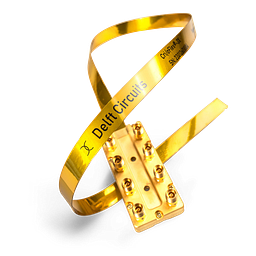
Makes superconducting flexible cabling with integrated filtering for high-density cryogenic quantum I/O.
 Startup
Builds quantum computers using spin qubits in modified silicon CMOS transistors.
 Startup
Builds quantum chips that use single electrons floating on superfluid helium as qubits, controlled by CMOS.
 Startup
Builds trapped-ion quantum computers controlled with microwaves instead of lasers.
 Startup
Develops cryogenic control electronics and infrastructure for scaling quantum computers.
 Startup
Software infrastructure for programmable fault-tolerant quantum computing.
 Startup
Builds rack-mounted silicon spin-qubit quantum computers designed to run inside existing data centers.
 Startup
Quantum software platform for R&D teams covering finance, simulation, quantum machine learning, and CFD workloads.
 Startup
Develops quantum-dot entangled photon generators and quantum interconnects for quantum networks.
 Startup
Designs fault-tolerant quantum computing architectures that turn noisy physical qubits into logical qubits.
 Startup
Builds modular photonic systems for scalable quantum networking.
 Startup
Innovating quantum computing solutions for industry.
 Startup
Builds helium-3-free magnetic cooling cryostats for qubit characterization and quantum computing cooling.
 Startup
Software running on quantum and classical computers for chemistry and drug discovery problems.
 Startup
Makes dry dilution refrigerators, including fast-turnaround systems for qubit testing.
 Startup
Builds compact dilution refrigerators designed to support more qubits in a smaller footprint.
 Startup
Combines materials, photonics, and matter qubits into a foundry-compatible quantum network architecture.
 Startup
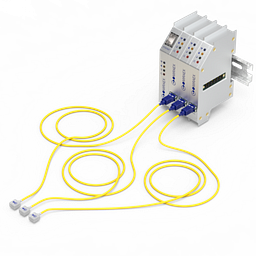
Builds photonic circuits as a quantum interconnect layer between quantum processors, sensors, and networks.
 Startup
Builds quantum computing applications for media, entertainment, and creativity.
 Startup
Builds bosonic qubits with built-in error correction toward fault-tolerant quantum computers.
 Startup
Builds quantum networking hardware, including a qubit-photon interface, to link quantum processors into distributed systems.
 Startup
Develops optical (photonic) quantum computers.
 Startup
Builds test and characterization equipment for quantum chips.
 Startup
Pioneering photonic quantum computing solutions.
 Startup
Builds superconducting quantum computers, quantum chips, software, and a quantum cloud platform.
 Startup
Builds superconducting quantum computers for enterprise and data center deployment.
 Startup
Quantum architecture company offering the Parity architecture and compiler products.
 Startup
Develops quantum algorithms for materials simulation and optimization on near-term quantum hardware.
 Startup
Builds distributed quantum computers using T-centre spin qubits in silicon linked by telecom photons.
 Startup
Builds waveguide-integrated superconducting nanowire single-photon detectors for photonic quantum computing.
 Startup
Develops superconducting quantum processors with a proprietary qubit control approach.
 Startup
Builds neutral-atom quantum processors using atoms trapped in optical lattices.
 Startup
Quantum computing drug discovery platform for hit and lead generation.
 Startup
Builds a utility-scale photonic quantum computer using silicon photonic chips made in commercial fabs.
 Startup
Quantum control infrastructure and field-validated quantum navigation.
 Startup
Builds modular control and readout electronics for scaling qubit systems across modalities.
 Startup
Builds special-purpose optical quantum computers (coherent Ising machines) for optimization problems.
 Startup
Quantum cloud platform with a cloud IDE and gateway for running circuits on multiple hardware providers.
 Startup
Software for designing, simulating, and optimizing fault-tolerant quantum computer architectures.
 Startup
Quantum computing solutions for enterprises.
 Startup
Platform that matches business problems to combinations of quantum algorithms and hardware.
 Startup
Quantum error mitigation and suppression software available across hardware platforms.
 Startup
Develops analog and digital superconducting full-stack quantum computers, available via cloud or on premises.
 Startup
Develops superconducting quantum processors using semiconductor manufacturing.
 Startup
Software stack for orchestrating hybrid quantum-classical and distributed quantum workloads.
 Startup
Builds microwave-to-optical quantum transducers for optical qubit readout and networking of quantum processors.
 Startup
Builds superconducting quantum computers alongside AI software.
 Startup
Physics-driven digital twin and machine learning software for developing and calibrating quantum devices.
 Startup
Develops an architecture for scaling superconducting quantum computers to very large qubit counts.
 Startup
Builds photonic quantum computers based on its semiconductor single-photon sources, with cloud access.
 Startup
Machine learning software for qubit bring-up, characterization, and tuning.
 Startup
Develops multi-core trapped-ion quantum computers with multi-qubit gates.
 Startup
Room-temperature quantum computing solutions.
 Startup
Quantum development platform using digital twin simulation of quantum hardware.
 Startup
Builds quantum control hardware and orchestration software for quantum computers.
 Startup
Builds silicon spin-qubit quantum computers made with standard CMOS semiconductor manufacturing.
 Startup
Large-scale quantum circuit simulator plus an API for running jobs on QPUs from multiple providers.
 Startup
Develops photonic quantum computers that use single atoms on photonic chips to generate photons and run atom-photon gates.
 Startup
Quantum computing software for complex optimization problems such as air cargo loading.
 Startup
Hardware-agnostic platform for developing, deploying, and governing quantum software applications.
 Startup
Designs and manufactures superconducting quantum processors sold to system builders, including its VIO 3D scaling architecture.
 Startup
OIST spinout developing trapped-ion quantum computers.
 Startup
Builds trapped-ion quantum computers and processors controlled by microwave electronics.
 Startup
Osaka University spinout building quantum computer control hardware and middleware that drives qubit chips.
 Startup
Develops quantum algorithms and a cloud-based materials calculation service.
 Startup
Builds neutral-atom quantum computers for cloud and on-premise use.
 Startup
Builds photonic quantum computers on silicon nitride chips for data centers and HPC.
 Startup
Develops quantum computing software for industrial problems, especially chemistry.
 Startup
Builds entanglement sources, memory modules, and optical interconnects for quantum networks.
 Startup
Builds entanglement sources, room-temperature quantum memory, and stabilization hardware for quantum networks over telecom fiber.
 Startup
Develops quantum chemistry algorithms, including HI-VQE.
 Startup
Develops silicon spin-qubit quantum computers built on industrial semiconductor processes.
 Startup
Builds the quantum error correction stack, including real-time decoders, for quantum hardware makers.
 Startup
Builds room-temperature quantum computers based on nitrogen-vacancy centers in diamond.
 Startup
Builds digital superconducting quantum computing chips that integrate classical control logic with qubits on chip, and runs a superconducti…
 Startup
Makes cryogenically optimized CMOS transistors and silicon quantum dot devices for scalable quantum hardware.
 Startup
Develops traveling-wave parametric amplifiers for low-noise qubit readout.
 Startup
Builds quantum processors from phosphorus atoms precisely placed in pure silicon, fabricated in house.
 Startup
Makes quantum-dot single-photon source chips used in photonic quantum computing and communication.
 Startup
Builds superconducting quantum computers and chips, plus desktop NMR quantum computers for education.
 Startup
Compute platform giving enterprises and governments access to quantum, AI, and optimization resources.
 Startup
Develops photonic quantum chips and optical quantum computing systems.
 Startup
Builds modular trapped-ion quantum computers aimed at utility scale.
 Startup
Builds cold-atom quantum memories and quantum links to interconnect quantum processors.
 Startup
Builds room-temperature diamond spin-qubit quantum processors.
 Startup
Quantum application discovery and development platform, relaunched after the 2024 wind-down of Zapata AI.
 Startup
Manufactures ultra-low temperature dilution refrigerators and cryogenic equipment for quantum technology.
 Startup
Optimization platform for manufacturing, logistics, and energy using optimization, AI, and quantum computing.
 Startup
Builds measurement-device-independent QKD network infrastructure. Pure QKD vendors are adjacent.
 Startup
QKD and quantum random number generator vendor, now part of IonQ. Pure QKD vendors are adjacent.
 Startup
Neutral-atom quantum systems for sensing, timing, and computing.
 Startup
Development platform for mathematical optimization and quantum computing.
 Startup
Builds integrated-photonics QKD for quantum-safe communication. Pure QKD vendors are adjacent.
 Startup
Builds chip-based QKD and quantum random number generators. Pure QKD vendors are adjacent.
 Startup
Builds continuous-variable QKD systems. Pure QKD vendors are adjacent.
 Startup
Drug discovery company using physics-based simulation and quantum computing methods.
 Startup
Superconducting single-photon detectors and quantum measurement systems.
 Startup
Builds satellite QKD systems. Pure QKD vendors are adjacent.
 Startup
Offers quantum-as-a-service spanning algorithms, computing, and quantum security.
 Startup
Builds entanglement-based QKD networks. Pure QKD vendors are adjacent.
 Community
Advancing quantum information science and engineering.
 Innovation Hub
 Innovation Hub
Quebec's first quantum innovation zone.
 Community
Promoting the growth of the quantum technology sector in Europe.
 Trade Organization
IEEE Computer Society technical community for quantum computing and engineering that runs IEEE Quantum Week (QCE), podcasts, standards and…
 Nonprofit Ecosystem Builder
Building a quantum ecosystem in France.
 Community
Fostering the quantum technology ecosystem in India.
 Community
National center for quantum technology growth in Australia.
 Innovation Hub
Establishing the Netherlands as Europe's quantum innovation hub.
 Innovation Hub
Accelerating quantum innovation from lab to market.
 Community
Volunteer foundation supporting open source quantum computing tools through a mentorship program, software evaluation and curated learning…
 Innovation Hub
Advancing quantum technologies through collaboration.
 Community
Global network and Estonian non-profit association running quantum computing education workshops (QBronze, QSilver), courses, internships a…
 Community
Advancing Australia's quantum economy through education and collaboration.
 Nonprofit Ecosystem Builder
501(c)(3) nonprofit, formerly Unitary Fund, that funds and builds open source quantum software (Mitiq, Metriq, UCC) and runs microgrants an…
 Nonprofit Ecosystem Builder
Washington DC based nonprofit whose Womanium Quantum program runs global online quantum computing training, scholarships and a startup laun…
 Nonprofit Ecosystem Builder
Connecting Montana's optics and quantum sectors.
 Accelerator
Accelerating the growth of the photonics sector in Scotland.
 Trade Organization
Industry consortium for the quantum technology ecosystem.
 Community
Advancing quantum technologies through collaboration and research.
 Innovation Hub
Switzerland's first quantum computing hub, founded in 2022 by uptownBasel Group in Arlesheim, offering quantum and AI access, services and…
 Media Publication
New York based quantum technology news site, research publisher and conference organizer (IQT events).
 Media Publication
Quantum industry news, analysis and data site published by Global Quantum Intelligence (GQI), a quantum technology market intelligence firm.
 Media Publication
Independent publication founded in 2018 covering quantum computing, networking and security news, company analysis and features.
 Company
Builds quantum annealing computers and gate-model superconducting quantum systems.
 Company
Builds a programming and compilation stack for developers to write and run programs on quantum computers.
 Company
Builds trapped-ion quantum computing systems sold on premises and through cloud access.
 Company
Builds full-stack superconducting quantum computers for HPC centers and research.
 Company
Builds neutral-atom quantum processors using arrays of atoms held in optical tweezers.
 Company
Builds trapped-ion quantum computers and quantum software.
 Other
Other Incubator
Catalyst for innovation in quantum technologies.
 Company
Builds superconducting quantum processors and full-stack quantum computers, offered over the cloud and on premises.
 Research Data Provider
Market intelligence for the quantum technology sector.
 Company
Builds photonic quantum computers and develops the PennyLane quantum software library.
 Other
Other Other
Other Other
OtherMoney and ways in
 accelerator
 acceleratorpublic-program
Proactive and on-call support for quantum startups growing in Illinois, Wisconsin, and Indiana.
otherD-Wave's Leap Quantum LaunchPad is a selective 3-month trial of D-Wave quantum computers and hybrid solvers with expert support; applicatio…
 accelerator
 fellowshipgrantfellowship
A quantum science postdoctoral appointment at IQIM, with positions scheduled to begin in fall 2027.
 competition
iQuHACK is MIT's annual quantum hackathon with in-person and remote tracks; the 2026 edition ran January 30 to February 1, 2026 and 2027 da…
fellowshipA ten-week residential quantum research fellowship offering undergraduate research experiences at eight university and national laboratory…
fellowshipPre-TraQtion is a University of Maryland Quantum Startup Foundry program for earlier-stage quantum and enabling-technology startups seeking…
 acceleratorcompetition
QHack 2026 is Xanadu's PennyLane quantum coding competition, October 16 to 23, 2026, with a USD 15,000 first prize and up to USD 67,000 in…
acceleratorA startup partnership for co-developing quantum solutions and exploring use cases with access to Quantinuum hardware, software, and service…
fellowshipParticipants develop open-source quantum computing software projects individually or in teams of up to three.
 incubator
The Quantum Landing Pad from TUM Venture Labs, Munich Quantum Valley and Invest in Bavaria helps international quantum startups set up in M…
 incubatortrainingpublic-program
 fellowship
TUM Venture Lab Quantum Fellowship Program is Technical University of Munich's fellowship offering entrepreneurship education for aspiring…
fellowshipfellowshipMunich Quantum Valley and IMPRS-QST offer fully funded 3-year quantum PhD fellowships in Bavaria; the last call closed January 15, 2026.
Next door
Deep tech, quantum computing, advanced materials, and emerging science.
Additive manufacturing technology for producing physical objects
Novel materials with superior properties for manufacturing
Distributed computing processing data at network edges
Nuclear fusion technology for clean, abundant energy generation
Physical product engineering.
Is this page right?How the research works


